
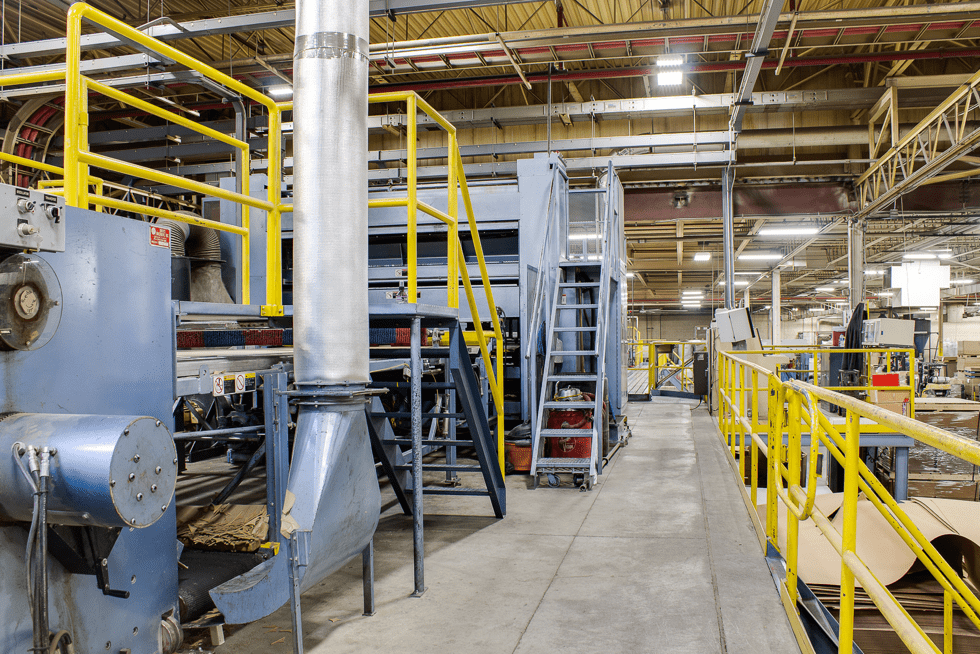
Extrusion. Laminating. Die cutting.
Three conversion processes, one plant, one tolerance carried across the whole sequence.
Buy one process or the whole line
Each process below stands on its own. The reason to run them in sequence is that the board never leaves the building, so there is no handoff between suppliers for variation to enter through.
Maximum die cut sheet
84 × 75 in
Coating applied
Polyethylene
Board stock
Recycled, virgin
Barrier liners
PE, foil
Processes on site
3 of 3
01
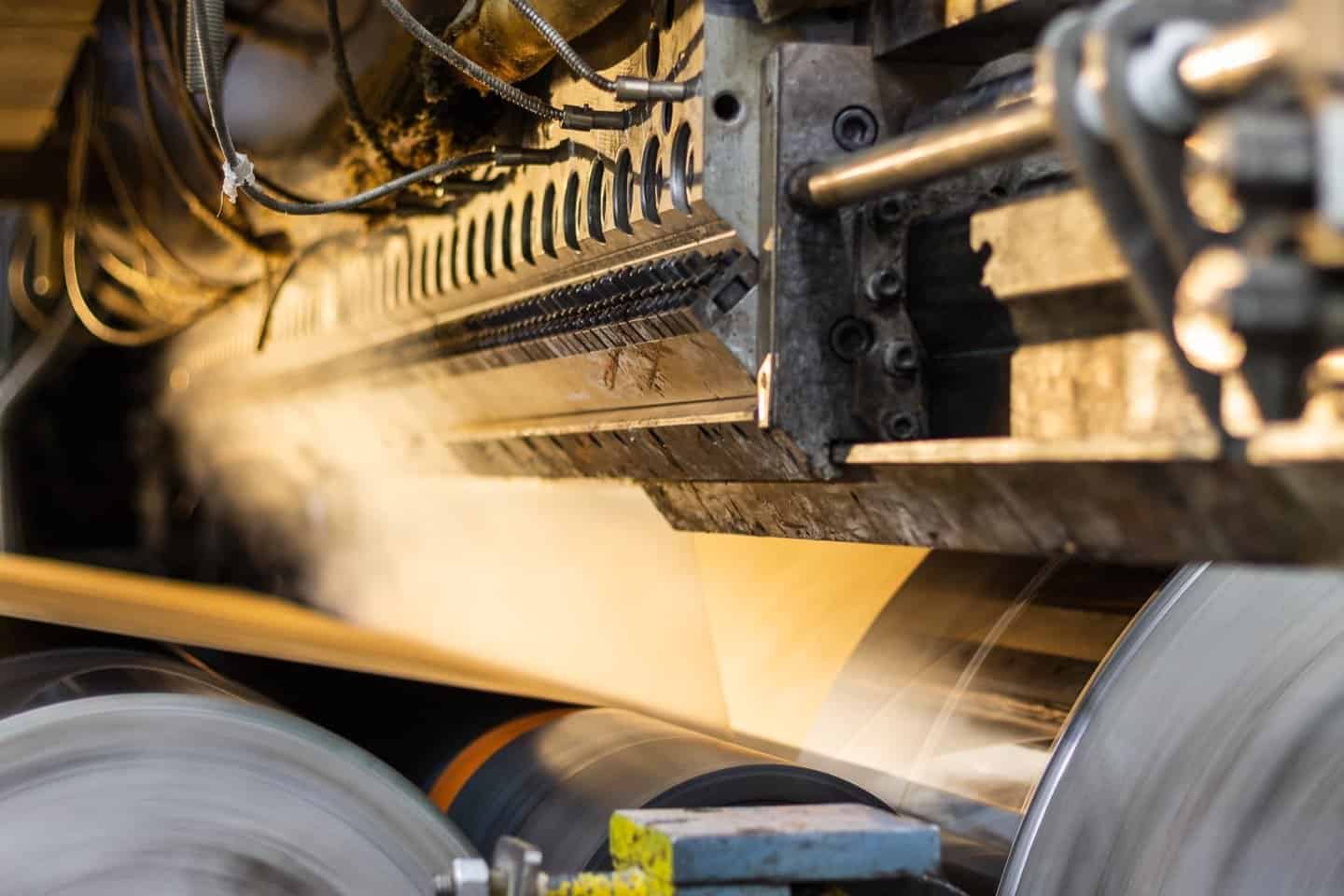
Extrusion coating
Molten polyethylene is applied directly onto the board as it runs through the line, bonding as it cools against the chill roll.
The result is poly coated board: a paper substrate that now carries a moisture or grease barrier the base stock could never provide on its own. It is the difference between a board that survives a humid warehouse or a wet assembly area and one that does not.
Because coating happens here rather than at a separate converter, the coated web can go straight into laminating or die cutting without being shipped, stored and re handled between operations.
Specify it by
- Substrate
- Recycled or virgin
- Coating
- Polyethylene
- Barrier requirement
- Moisture, grease
- Coated side
- One or both
02
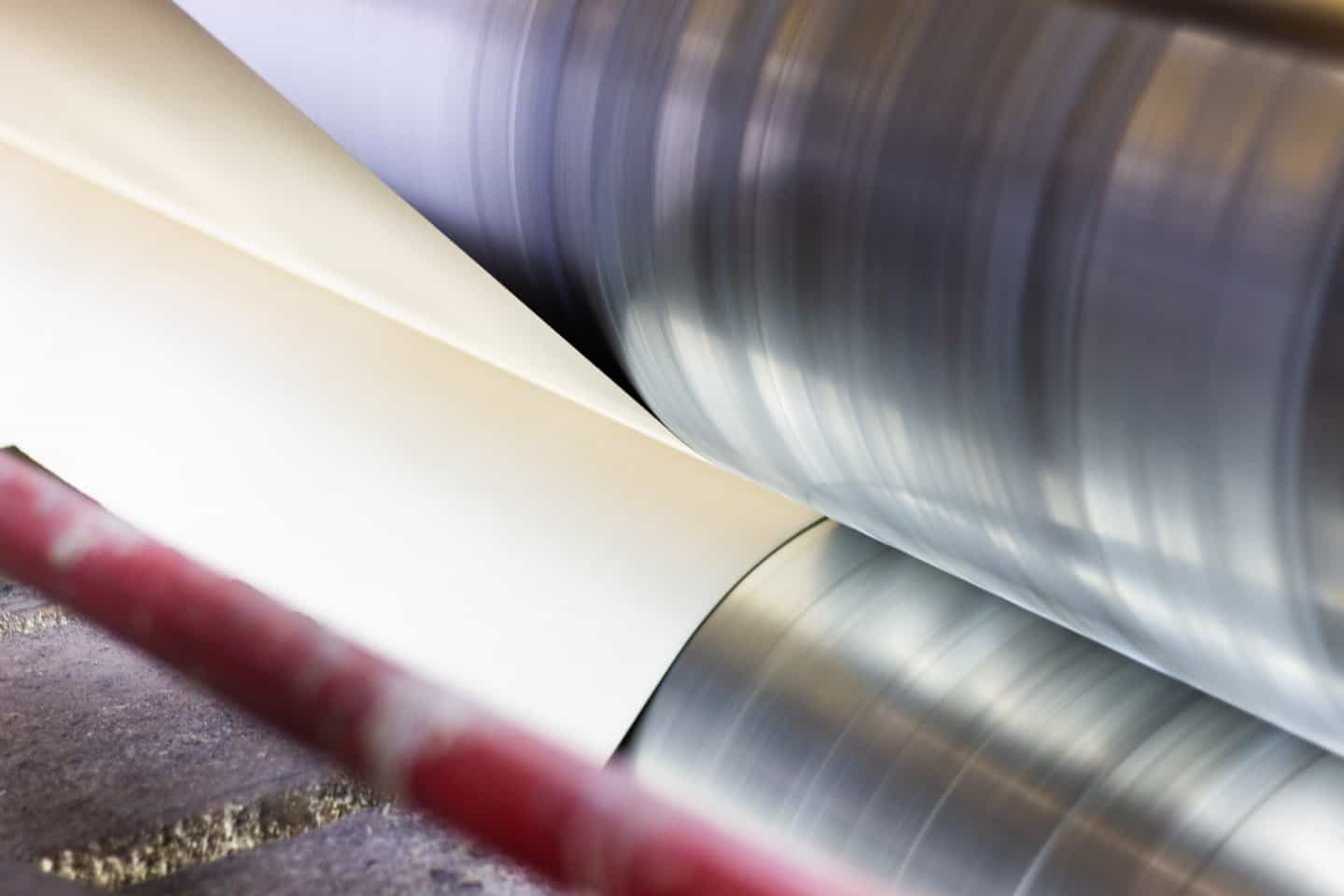
Laminating
Separate plies are bonded into one board, built up to the caliper and stiffness the finished part requires.
This is where a component stops being paper and starts being structure. A back panel that has to stay flat under load, a trim substrate that has to hold its shape through assembly, and a slip sheet that has to survive being dragged by a push pull attachment are all the same process solved at different constructions.
Grades are combined against the requirement rather than pulled from a standing catalogue: recycled paperboard, virgin kraft liner board, and specialty liners carrying polyethylene or foil barriers.
Specify it by
- Ply count
- To construction
- Caliper
- To specification
- Liner
- Kraft, PE, foil
- Stiffness
- To application
03
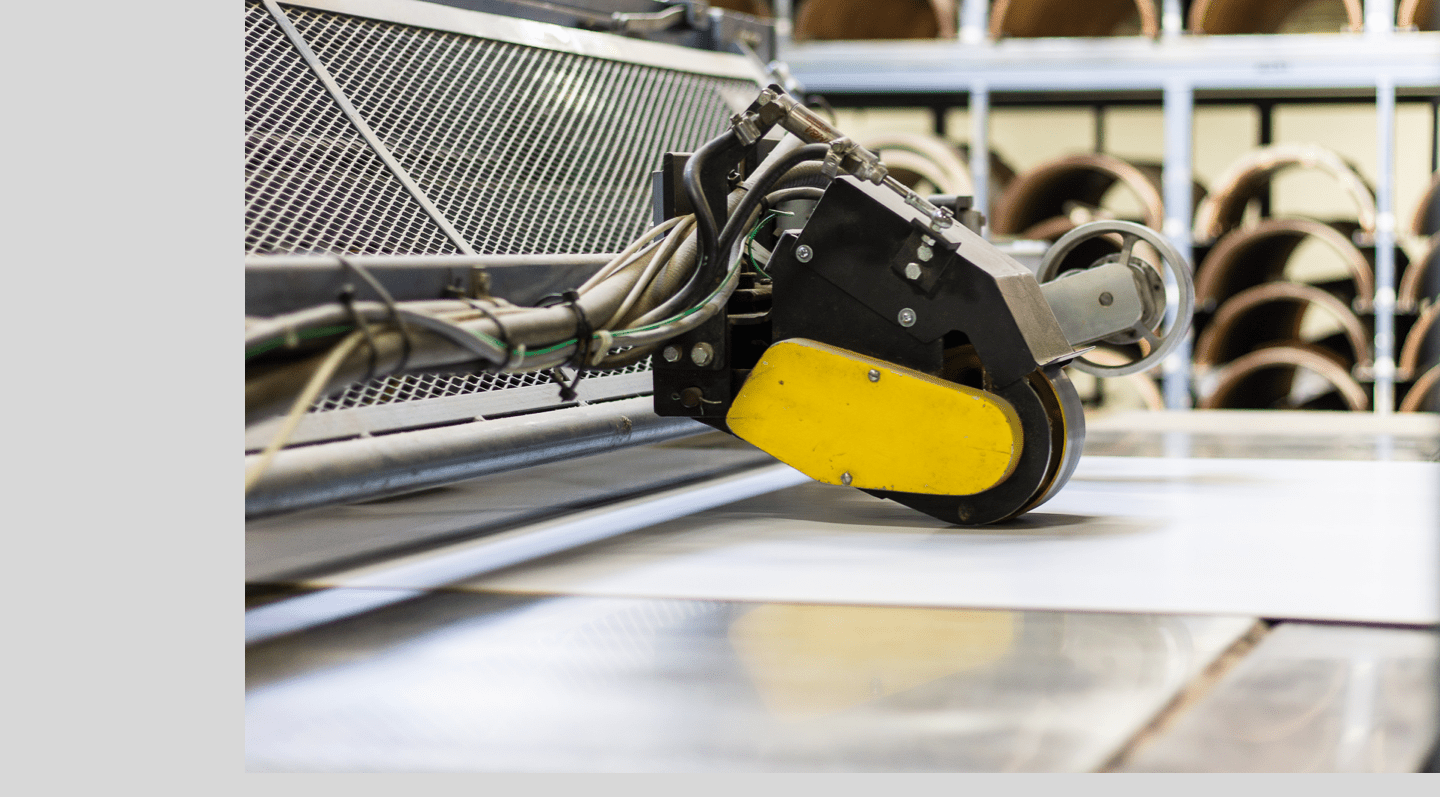
Die cutting
Laminated sheets are cut to profile at sizes up to 84 in by 75 in.
That envelope is the reason a part can leave here finished. Below it, you receive a component that drops into your assembly. Above it, someone has to cut it again somewhere else, which adds a supplier, a freight leg and a second chance for the dimension to move.
Specify it by
- Maximum sheet
- 84 × 75 in
- Profile
- To drawing
- Input
- Laminated board
- Output
- Finished component
Material stock
Grades are selected against the specification. These are the families we convert from.
-
Recycled paperboard
Multiple grades, the volume workhorse
-
Virgin kraft liner board
Where strength and consistency lead
-
Specialty liners
Polyethylene or foil barrier
-
Poly coated board
Functional coatings applied on site
Choosing between the three
04 questions
Q.01 Do I have to use all three processes?
No. Each can be bought on its own. Running them in sequence in one plant removes the handoffs between suppliers, which is usually where variation enters a laminated component.
Q.02 What is the difference between laminating and extrusion coating?
Laminating bonds plies of board together to build caliper and stiffness, which is a structural job. Extrusion coating lays a polyethylene film onto the surface to create a barrier, which is a functional one. Plenty of components need both.
Q.03 Which process does my part need?
If it has to carry load or stay flat, start at laminating. If it has to resist moisture or grease, you need coating. If it has to arrive as a shape rather than a sheet, it needs die cutting. Most structural components touch at least two.
Q.04 How large a sheet can be die cut?
Up to 84 in by 75 in.
Tell us the part. We will tell you the process.
Send a drawing, or just describe what the component has to do and what it has to survive.