
03 of 03
Die Cutting
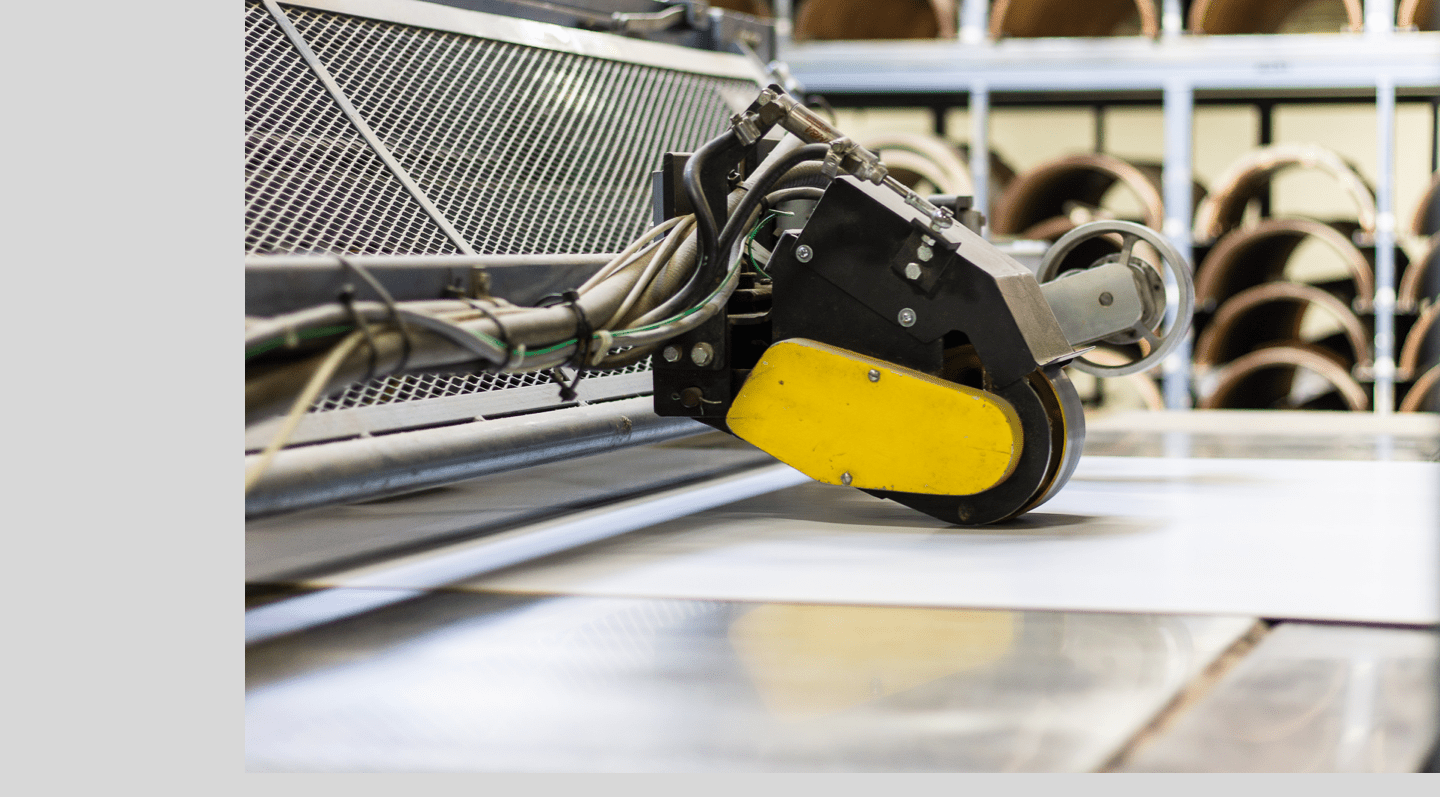
Laminated sheets are cut to profile at sizes up to 84 in by 75 in.
What it does
Specify it by
Maximum sheet
84 x 75 in
Profile
To drawing
Input
Laminated board
Output
Finished component
That envelope is the reason a part can leave here finished. Below it, you receive a component that drops into your assembly. Above it, somebody has to cut it again somewhere else, which adds a supplier, a freight leg and a second chance for the dimension to move.
Input is laminated board, coated or uncoated. Output is a component cut to your drawing, ready to go into the line it was designed for.
Typically specified for
- Finished components across seven industries
- Parts cut to a supplied drawing
- Board that must arrive as a shape
- Work that would otherwise need a second converter
Die Cutting is one of three. The other two run in the same building.
That is the reason a specification survives the whole sequence: the board is never handed to another supplier between operations.
Die Cutting questions
04 questions
Q.01 How large a sheet can be die cut?
Up to 84 in by 75 in.
Q.02 What happens if my part is larger than that?
It cannot leave here as a finished component. It would need cutting elsewhere, which adds a supplier and another chance for the dimension to move. Worth a conversation early.
Q.03 Do you cut board you did not laminate?
Ask. The usual reason to run all three processes here is that the board never leaves the building, but the processes are available on their own.
Q.04 What do you need from me to quote a cut part?
A drawing or dimensions, the board construction if you know it, an annual volume, and where the part is used.
Send the specification. We will tell you if it runs.
Material, caliper, dimensions and annual volume are enough to start.