
01 of 03
Extrusion Coating
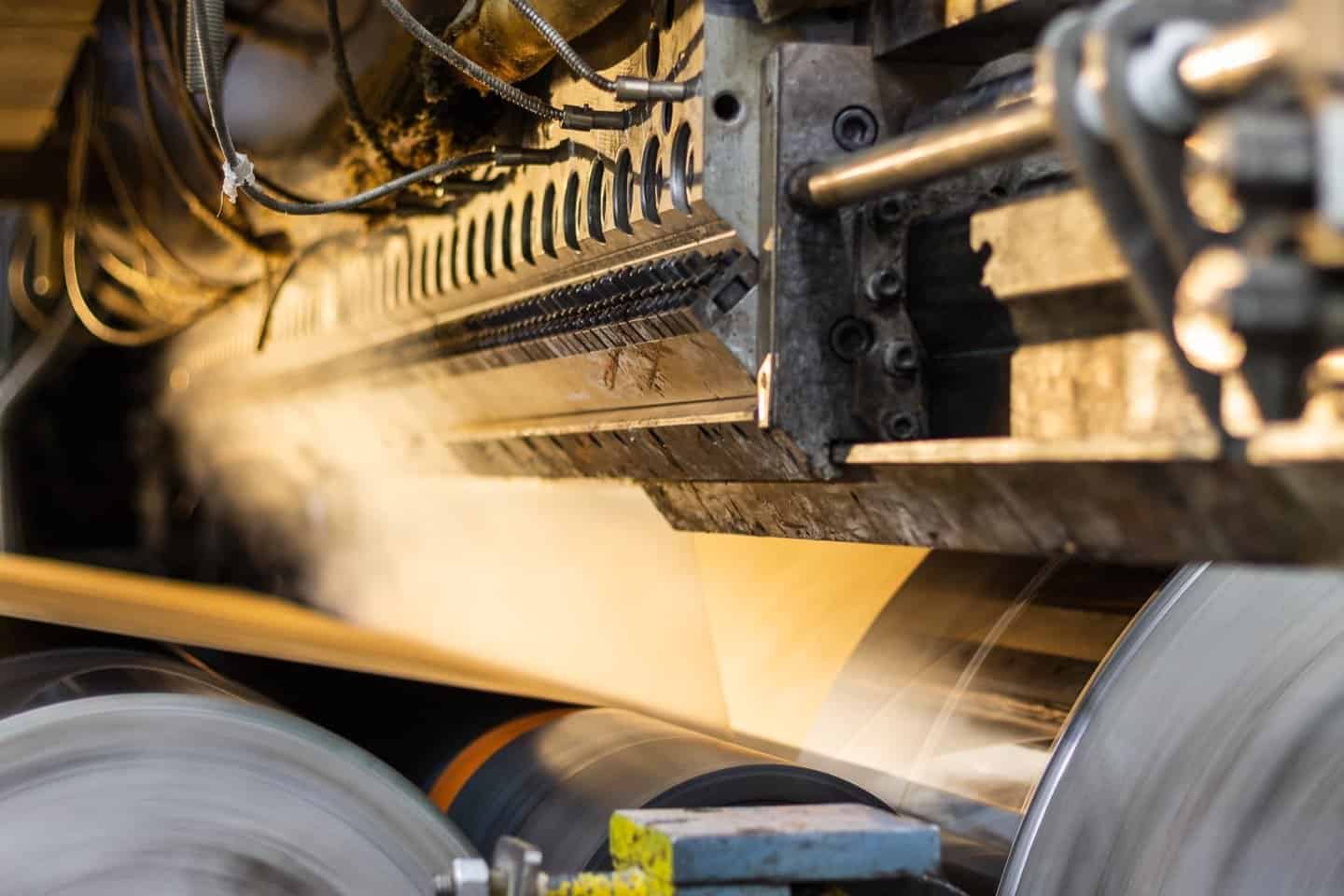
Molten polyethylene is applied directly onto the board as it runs through the line, bonding as it cools against the chill roll.
What it does
Specify it by
Substrate
Recycled or virgin
Coating
Polyethylene
Barrier requirement
Moisture, grease
Coated side
One or both
The result is poly coated board: a paper substrate that now carries a moisture or grease barrier the base stock could never provide on its own. It is the difference between a board that survives a humid warehouse or a wet assembly area and one that does not.
Because coating happens on this site rather than at a separate converter, the coated web can go straight into laminating or die cutting without being shipped, stored and re handled between operations.
Typically specified for
- Poly coated packaging board
- Components exposed to moisture
- Barrier liners with PE or foil
- Board that must resist grease
Extrusion Coating is one of three. The other two run in the same building.
That is the reason a specification survives the whole sequence: the board is never handed to another supplier between operations.
Extrusion Coating questions
04 questions
Q.01 What is extrusion coating?
A layer of molten polyethylene is extruded straight onto the moving board and bonded as it cools against a chill roll. The board leaves with a polymer skin on it.
Q.02 How is it different from laminating?
Laminating bonds plies of board together to build caliper and stiffness, which is structural. Extrusion coating adds a surface layer to create a barrier, which is functional. Plenty of components need both.
Q.03 Can you coat both sides?
Yes. Whether one side or both are coated is part of the specification, and it usually follows from which surfaces are exposed in service.
Q.04 What substrates can be coated?
Recycled paperboard and virgin kraft liner board, plus specialty liners. The grade is selected against the requirement rather than pulled from a standing catalogue.
Send the specification. We will tell you if it runs.
Material, caliper, dimensions and annual volume are enough to start.