
02 of 03
Laminating
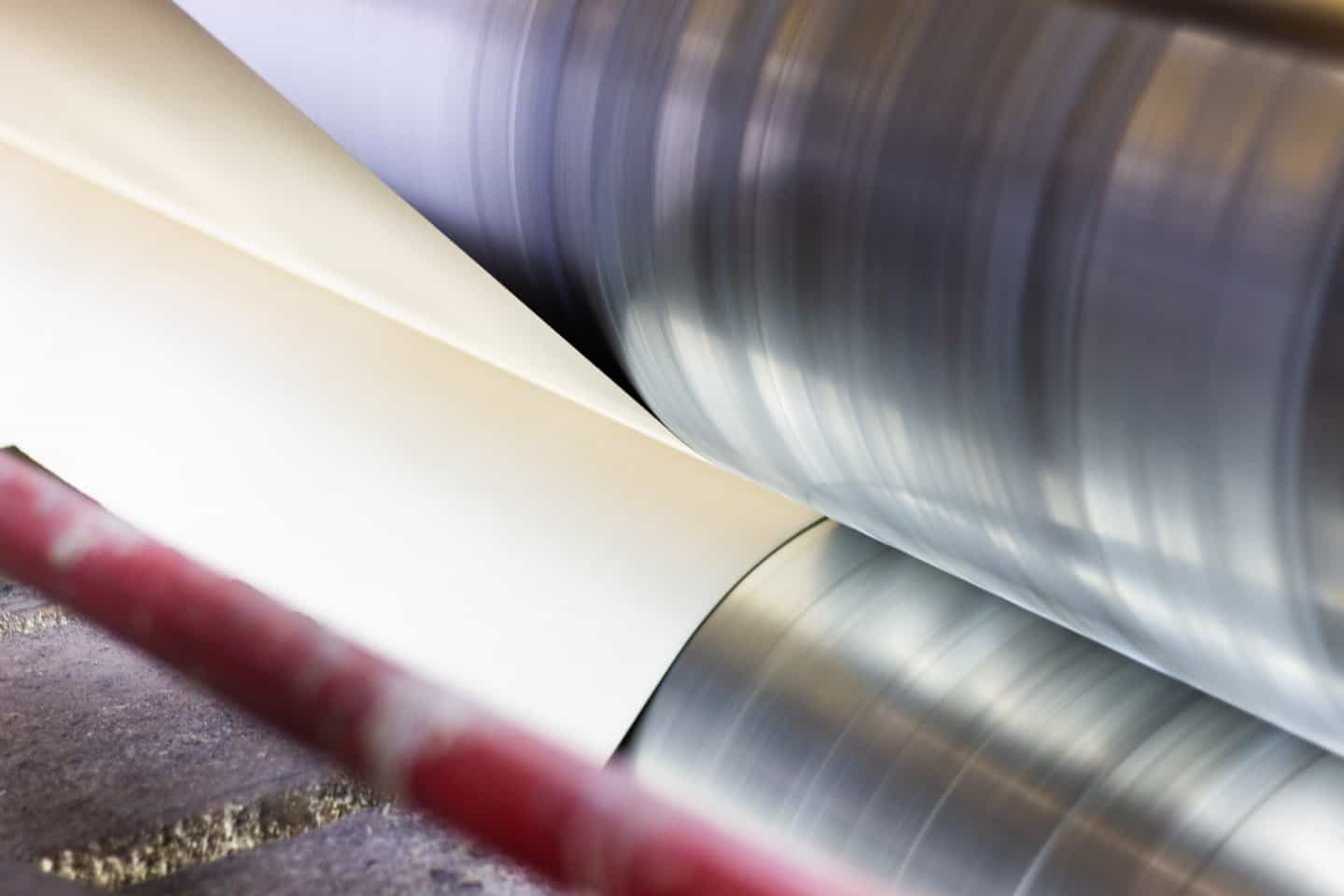
Separate plies are bonded into one board, built up to the caliper and stiffness the finished part requires.
What it does
Specify it by
Ply count
To construction
Caliper
To specification
Liner
Kraft, PE, foil
Stiffness
To application
This is where a component stops being paper and starts being structure. A back panel that has to stay flat under load, a trim substrate that has to hold its shape through assembly, and a slip sheet that has to survive being dragged by a push pull attachment are the same process solved at different constructions.
Grades are combined against the requirement: recycled paperboard, virgin kraft liner board, and specialty liners carrying polyethylene or foil barriers.
Typically specified for
- Automotive interior trim foundation
- RTA furniture back panels
- Drawer bottoms
- Tier and slip sheets
- Exterior sheathing board
Laminating is one of three. The other two run in the same building.
That is the reason a specification survives the whole sequence: the board is never handed to another supplier between operations.
Laminating questions
04 questions
Q.01 What does laminating actually change?
It builds caliper and stiffness. A single ply of board bends; several plies bonded together behave like a panel, which is what a structural component needs.
Q.02 How many plies can be laminated?
Ply count follows the construction the part requires rather than a fixed menu. Send the load case and the dimensions and it gets worked back from there.
Q.03 Can barrier liners be laminated in?
Yes. Specialty liners carrying polyethylene or foil barriers can be built into the construction, so one board can be both structural and protective.
Q.04 Do I need to know the caliper before I ask?
No. Describe what the part has to do and what it has to survive, and the caliper comes out of that.
Send the specification. We will tell you if it runs.
Material, caliper, dimensions and annual volume are enough to start.